
Bingo is one of the most engaging chance-based games in the online gaming ecosystem, combining entertainment, anticipation, and social interaction. On platforms like Rummy Wealth, Bingo has evolved into a modern digital experience where users can participate in real-time rooms, enjoy themed gameplay, and win rewards through structured number matching systems.
Unlike traditional card-based formats, Bingo focuses on pattern recognition and probability. Players receive cards with randomized numbers, and as numbers are drawn, they mark matches to complete predefined patterns such as lines, diagonals, or full houses.
In India’s fast-growing gaming market, Bingo has gained popularity due to its simplicity, mobile accessibility, and low entry barrier.
Bingo operates on a simple yet highly structured gameplay system built around random number generation (RNG) and probability-based outcomes. At its core, the game ensures that every number drawn is completely independent and unpredictable, creating a fair and balanced environment for all participants. This randomness is what makes Bingo both exciting and statistically neutral, as no player can influence or predict the outcome of the draw.
In digital Bingo systems, fairness is enforced through certified RNG algorithms that simulate real-world randomness. Every participant enters the game under identical conditions, meaning no player receives an advantage in timing, card distribution, or number sequencing. This equal-opportunity structure is one of the main reasons Bingo remains popular in modern online gaming platforms.
Another important aspect is the real-time synchronization of gameplay. All players in a room experience the same number draw sequence simultaneously, ensuring that competition is based purely on speed of pattern completion rather than external factors.
Key Stages of Gameplay
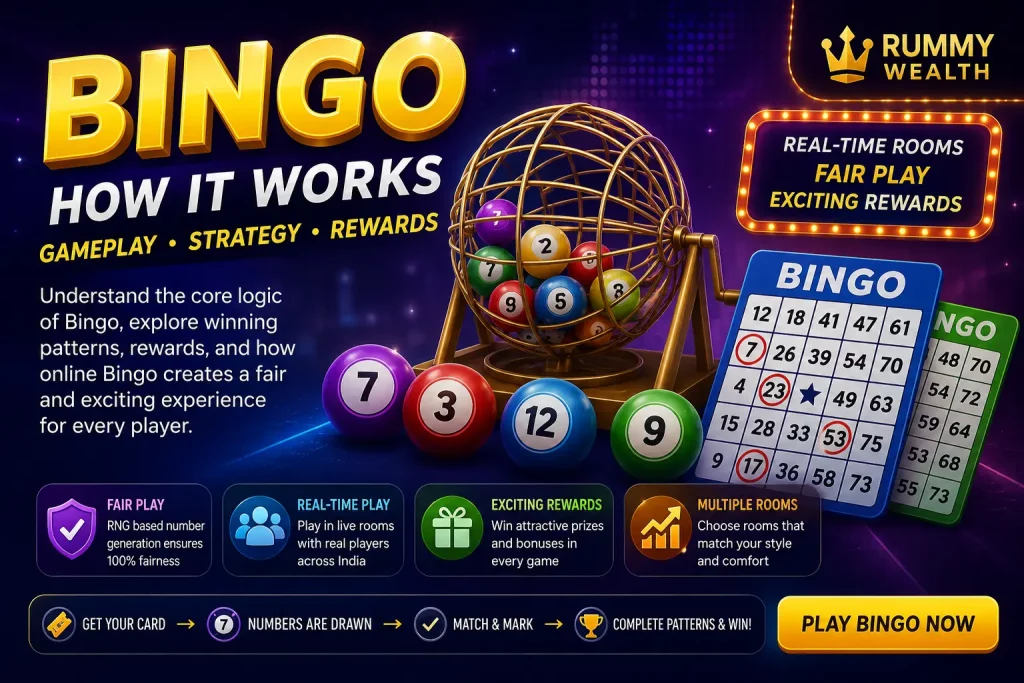
1. Players Receive a Digital Bingo Card
Each player is assigned one or multiple randomized Bingo cards at the beginning of the game session. These cards contain a grid of numbers arranged in a structured format depending on the game type (e.g., 75-ball or 90-ball Bingo). Each card is unique, which ensures that no two players share identical number layouts.
2. Random Numbers Are Drawn Continuously
A central system generates numbers at fixed intervals using RNG technology. These numbers are announced across the entire game room in real time. Every participant sees the same sequence of numbers, which maintains fairness and keeps the gameplay synchronized across all devices.
3. Matching Numbers Are Marked Automatically or Manually
When a drawn number appears on a player’s card, it is marked either automatically by the system or manually by the player, depending on the platform’s design. Modern systems typically use auto-marking to reduce errors and improve gameplay speed, especially on mobile devices.
4. Winning Depends on Completing Patterns First
Victory in Bingo is determined by completing predefined patterns before other players. These patterns may include a single line, multiple lines, diagonal shapes, or a full house depending on the variation of the game.
The first player to complete a valid pattern declares “Bingo” and is verified by the system before being awarded the prize. This verification step ensures accuracy and prevents disputes in competitive play.
Game Types
| Type | Description | Winning Pattern |
|---|---|---|
| 90-Ball Bingo | Classic UK-style version | 1 Line / 2 Lines / Full House |
| 75-Ball Bingo | Popular in online platforms | Various Patterns |
| 30-Ball Speed Bingo | Fast-paced mini version | Full Card |
Bingo Growth in Online Gaming
The growth of Bingo in the online gaming ecosystem has been strongly influenced by the rapid expansion of mobile-first digital platforms. As smartphones became more affordable and internet connectivity improved, Bingo transformed from a traditional, offline social game into a highly accessible online entertainment format available anytime and anywhere.
One of the biggest drivers behind this growth is the shift toward real-time interactive gaming environments. Modern Bingo platforms now allow thousands of players to join synchronized rooms where numbers are drawn instantly, creating a shared competitive experience that feels dynamic and engaging rather than passive.
Another key factor is the improvement in user experience design (UI/UX). Earlier online Bingo versions were simple and static, but today’s platforms use smooth animations, intuitive dashboards, and responsive layouts optimized for both Android and iOS devices. This makes gameplay easier for beginners while still maintaining excitement for experienced users.
Instant reward systems have also played a crucial role. Players no longer need to wait for long processing times—winnings are often credited immediately, which significantly increases trust and retention rates. This has helped Bingo evolve into a structured digital gaming category rather than just a casual pastime.
In India, Bingo is increasingly integrated into a broader digital entertainment ecosystem where users often switch between different formats such as card-based games and number-based formats. Within platforms like Rummy Wealth, Bingo exists alongside other interactive experiences such as Login-based tournaments, Bonus reward events, promotional Sign up offers, mobile APK downloads for quick access, and even adjacent Slots and Games categories connected through internal Links.
This interconnected structure makes Bingo part of a larger engagement loop rather than an isolated game. Players are encouraged to explore multiple formats, which increases overall platform activity and strengthens long-term user engagement.
As the industry continues to evolve, Bingo is expected to benefit further from automation, improved matchmaking systems, and enhanced mobile optimization—cementing its position as a core component of modern online gaming in India.
Bingo Strategy, Engagement & Game Balance
Bingo is not only a game of chance but also a structured system where player engagement, timing, and probability design play a key role. Modern online Bingo platforms focus heavily on balancing entertainment value with fair gameplay mechanics, ensuring that every session feels dynamic, competitive, and rewarding.
One of the most important elements in Bingo systems is player engagement flow. From the moment a user joins a room, the system is designed to keep attention high through fast number draws, visual feedback, and progressive reward structures. This keeps players active and increases session duration without making the game feel repetitive.
Another important factor is difficulty distribution. Different Bingo rooms often have varying speed levels, card complexity, and prize structures. This allows users to choose gameplay intensity based on preference—some prefer relaxed sessions, while others engage in fast-paced competitive rooms.
In addition, modern Bingo systems use balanced probability distribution to ensure that winning opportunities are spread fairly across participants. This prevents predictable outcomes and keeps the game exciting for all players.
Bingo Engagement
| Mechanic | Purpose | Impact |
|---|---|---|
| Fast Number Draws | Maintain game momentum | Higher player retention |
| Room Difficulty Levels | Segment players by skill/speed | Better user experience |
| Auto-Marking System | Reduce manual errors | Faster gameplay flow |
| Reward Scaling | Increase motivation | Longer sessions |
Bingo Engagement Distribution
Engagement Logic Explained
Bingo platforms are carefully designed to guide users through a continuous engagement loop:
- Players enter a room based on preferred speed and reward level
- The system adapts number draw speed to match room type
- Visual cues highlight progress toward winning patterns
- Rewards and bonuses increase motivation to continue playing
This structured approach ensures that players remain engaged without feeling overwhelmed, while still maintaining competitive excitement.
Integration with Broader Gaming Ecosystem
On platforms like Rummy Wealth, Bingo is not isolated. It exists alongside multiple game categories such as card-based formats, reward-based events, and promotional systems. This ecosystem approach encourages users to explore different Games while staying within a unified platform environment.
Players often transition between Bingo rooms and other interactive experiences, creating a seamless entertainment cycle that increases both retention and platform activity.
Bingo Monetization, Rewards & User Flow
The monetization structure in modern Bingo platforms is built around a balanced system of entry fees, rewards, and retention incentives. Instead of relying on a single revenue stream, platforms combine multiple engagement-driven mechanics that keep users active while maintaining a fair gameplay environment.
At the core of this system is the reward distribution model, which ensures that winnings are allocated based on room type, difficulty level, and participation volume. Higher-stakes rooms naturally offer larger rewards, while casual rooms focus more on frequent but smaller wins. This creates a dynamic economy inside the game where players can choose their preferred risk–reward balance.
Another important element is the user lifecycle flow. Players typically move through stages: onboarding, initial free or low-cost sessions, engagement through small wins, and finally participation in higher-value rooms. This progression is designed to gradually increase user confidence and retention without overwhelming new players.
In India, Bingo platforms often integrate this system with broader ecosystem mechanics, where users transition between different game categories and promotional events. This creates a continuous loop of engagement across multiple gaming formats.
Bingo Monetization Structure
| Revenue Element | Description | User Impact |
|---|---|---|
| Entry Fees | Paid access to rooms | Controls competition level |
| Prize Pools | Shared winnings structure | Higher engagement motivation |
| Bonus Rewards | Daily & event-based rewards | Increases retention |
| Promotions | Special limited-time offers | Boosts active participation |
Bingo Monetization Breakdown
User Experience Flow in Monetized Bingo
The monetization model is tightly connected to how users interact with the platform. Instead of forcing spending, the system encourages gradual participation. Early gameplay is often low-risk, allowing users to understand mechanics before committing to higher-value rooms.
As users become more experienced, they naturally transition into more competitive environments where reward structures are more attractive. This progression is supported by visual cues, bonus triggers, and event-based incentives that guide behavior without interrupting gameplay.
Overall, Bingo monetization is designed not just for revenue generation, but for maintaining a stable and engaging ecosystem where users feel both entertained and rewarded over time.
Bingo Future, User Experience
The future of online Bingo is strongly connected to the evolution of mobile-first gaming ecosystems, real-time engagement technologies, and personalized player experiences. As platforms continue to scale, Bingo is becoming less of a standalone casual game and more of a structured entertainment system integrated into broader digital ecosystems.
One of the key directions of development is adaptive gameplay design. Modern systems are moving toward dynamic difficulty balancing, where room speed, reward frequency, and card complexity adjust based on player behavior. This creates a smoother experience for beginners while maintaining competitiveness for advanced users.
Another important trend is cross-game ecosystem integration. On platforms like Rummy Wealth, Bingo is not isolated. It exists alongside card-based formats, reward events, and promotional systems that guide users through multiple engagement paths. This interconnected structure increases retention and makes the platform more immersive.
Mobile optimization also plays a major role. With most users accessing games through smartphones, performance efficiency, low-latency number draws, and smooth UI transitions are now essential components of Bingo systems. This ensures consistent gameplay even under varying network conditions.
Bingo System Overview
| System Layer | Function | User Benefit |
|---|---|---|
| Gameplay Engine | RNG-based number generation | Fair and unbiased results |
| Reward System | Dynamic prize distribution | Motivation & engagement |
| Room Matching | Player grouping by level/speed | Balanced competition |
| Mobile Optimization | Low-latency real-time sync | Smooth gameplay on all devices |
| Ecosystem Integration | Connection with other games & events | Long-term user retention |
Bingo today is no longer just a simple number-matching game. It has developed into a fully structured digital entertainment ecosystem where game design, fairness algorithms, engagement mechanics, and reward distribution systems all work together to create a stable and long-term gaming environment. Modern digital Bingo platforms are built with advanced architecture that ensures each session is transparent, balanced, and driven by clearly defined probability rules, making the experience both entertaining and trustworthy for users.
In its current form, Bingo operates as part of a broader interactive gaming ecosystem rather than a standalone activity. Platforms such as Rummy Wealth integrate Bingo alongside other game categories to maintain continuous user engagement and provide players with a seamless transition between different gameplay styles. This multi-layered structure helps platforms increase retention while offering users a more dynamic entertainment journey, where each game contributes to a shared progression or reward framework.
One of the key reasons for Bingo’s modern popularity is its ability to combine randomness with structured progression. While number draws remain fundamentally random, today’s systems often include layered reward mechanics, such as milestones, bonus rounds, streak-based incentives, and event-driven payouts. These features transform Bingo from a purely chance-based game into a more engaging experience where players feel a sense of advancement and long-term involvement rather than isolated sessions.
Another important aspect is scalability. Bingo is highly adaptable across different digital environments because it requires minimal cognitive load while still maintaining excitement through anticipation and reward timing. This makes it ideal for integration into mobile-first platforms, where short, repeated sessions are more effective than long gameplay cycles. Developers can easily adjust pacing, prize structures, and engagement loops to suit different audience segments without altering the core mechanics of the game.
Overall, the combination of randomness, structured progression systems, and layered reward mechanics positions Bingo as one of the most flexible and scalable formats in modern online gaming. Its evolution reflects a broader industry shift toward hybrid entertainment models, where simplicity of gameplay is combined with deep engagement systems designed to retain users over time and support sustainable platform growth.
FAQ — Bingo Online
What is Bingo in online gaming?
Bingo is a number-based game where players match randomly drawn numbers on digital cards to complete patterns and win rewards.
Is Bingo based on skill or luck?
Bingo is primarily a game of luck since outcomes depend on random number generation, but attention and speed can influence performance.
Can I play Bingo on mobile?
Yes, modern platforms are fully optimized for mobile devices, offering smooth gameplay and real-time number updates.
Why is Bingo popular in India?
Its simplicity, fast gameplay, and integration with reward systems make it highly accessible and engaging for Indian users.






Comments